Phones · Oct 22, 2026 · 9 min read
iPhone Duo review (2026): is Apple’s first foldable worth it?
Hands-on take on Apple’s first foldable — outer vs inner screen, A20 Pro, eSIM-only quirks, $1,999 pricing, and who should still buy a Pro Max instead.
By Mark
Disclosure: this page contains Shopee and Lazada affiliate links. We may earn a commission at no extra cost to you. Prices move fast — check the live listing.
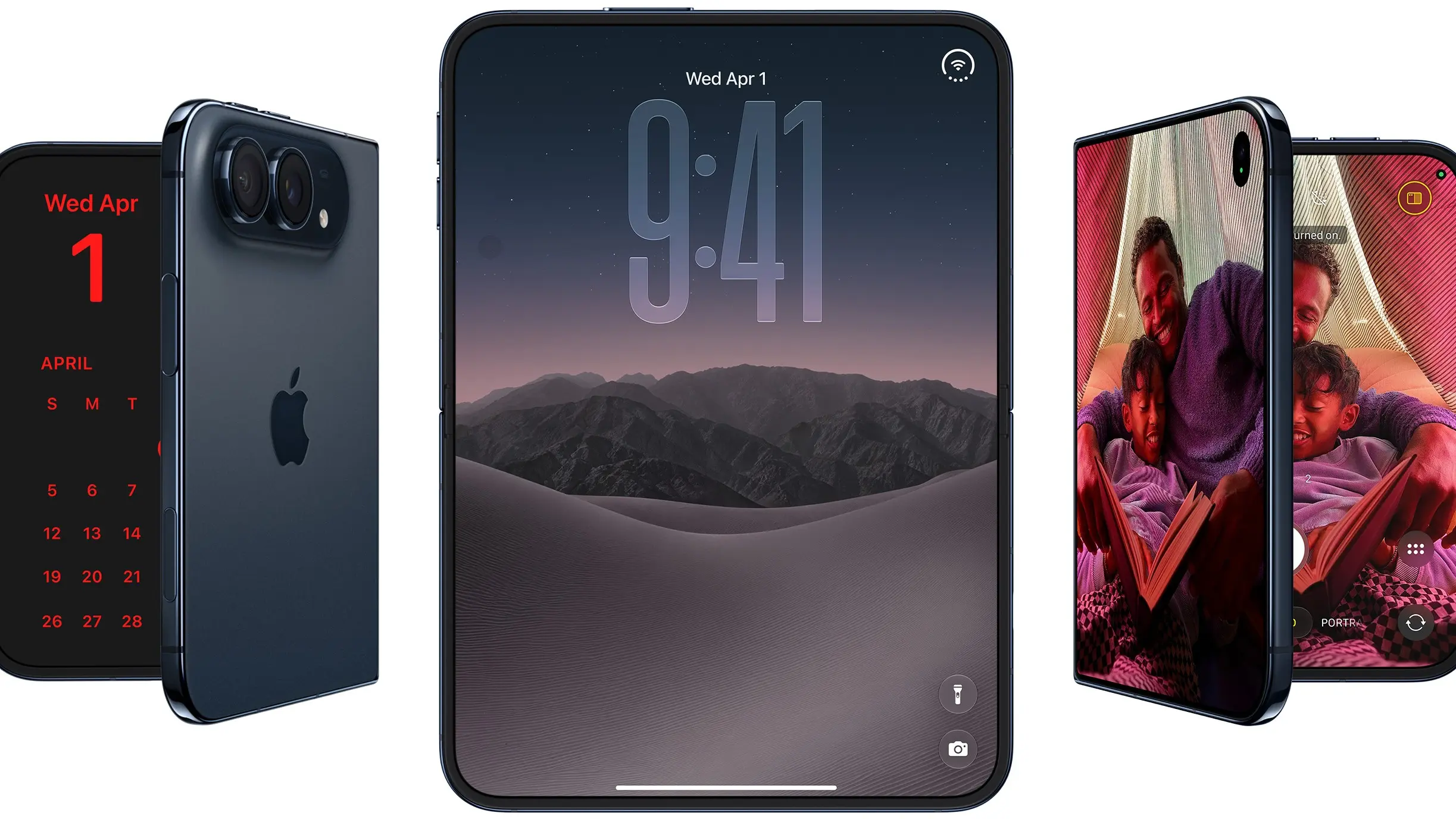
Apple finally shipped a phone that opens. iPhone Duo is the first foldable iPhone: a pocketable 5.4-inch cover screen that unfolds into a 7.6-inch tablet-ish canvas, powered by the same A20 Pro as the iPhone 18 Pro line, starting at $1,999 for 256GB.
This is not a “should everyone upgrade” review. It is a “should you pay flagship-plus money for a hinge” review — whether the crease will annoy you after a few months, whether the cover screen is actually usable all day, and whether Pro Max is still the smarter buy.
Quick verdict
Buy iPhone Duo if you already live in Apple’s ecosystem, you actually open a foldable every day (not just for demos), and you want Split View multitasking plus the camera modes that only work with two screens.
Skip it if you want the best telephoto zoom, the easiest “just works” iPhone, or you are stretching for your first flagship. An iPhone 18 Pro Max (or even a discounted 17 Pro Max) will frustrate you less day to day, and third-party App Store layouts are still catching up on the inner display.
Scorecard in plain language: design and performance — excellent; software maturity — early; value — hard to justify unless you specifically want a fold.
Specs that matter (not the brochure)
| Piece | What you get | Why it matters here |
|---|---|---|
| Outer display | 5.4" Super Retina XDR, ProMotion, Always On, up to 3000 nits | Usable one-handed; not a postage-stamp cover like early Android folds |
| Inner display | 7.6" Super Retina XDR, nano-texture, same aspect ratio as outer | Glare drops under office LEDs; crease is muted but still there if you hunt for it |
| Chip | A20 Pro + vapor chamber | Same brain as 18 Pro — foldables that throttle mid-game are not this |
| Battery | Dual cells (one per half), joint management | All-day is realistic if you mix screens; heavy inner-screen video drains faster |
| Unlock | Touch ID in the side button (+ Apple Watch unlock) | Face ID in a fold is awkward; fingerprint is the practical call |
| SIM | eSIM only, worldwide | No nano-SIM tray — set up your carrier eSIM before unboxing |
| Build | Grade 5 titanium, Ceramic Shield, IP68 | Heavier than a slim slab; still more “phone” than “fragile origami” |
| Storage | 256GB–2TB | Start at 256GB only if iCloud is already a habit |
| Colors | Star white, night sky | Fingerprints love the mirror titanium — a case is not optional if you hate smudges |
Apple rates up to 31 hours video on the inner screen and 44 hours on the outer in their lab numbers. Real life with social apps, Maps, and messaging will land closer to a normal Pro day if you keep flipping open for everything.
Design and daily feel
Closed, Duo is compact — think passport-adjacent thickness, not brick. The outer panel is large enough that answering chats, tapping to pay, and checking navigation does not feel like using a secondary gadget. That is the biggest win versus older foldables that made the cover screen a compromise.
Open it and you get Apple’s largest iPhone panel yet. The nano-texture inner glass is the quiet hero: café windows and fluorescent ceiling lights bounce less, so the crease does not scream at you the way glossy folds do. You will still notice a line if you look for it with a white wallpaper. Most people stop looking after a week.
The hinge feels deliberate — magnet-assisted close, stable when half-open for desk FaceTime. Titanium looks expensive; it also picks up micro-swipes from jeans. If you hate smudges, buy the official case or Folio on day one.
Displays and software (iOS 27 on a fold)
Both screens share the same aspect ratio, so apps do not feel like they jumped to a different phone when you unfold. ProMotion and Always On behave like modern iPhones. Peak brightness holds up outdoors — harsh noon sun is still harsh, but Duo is in the same conversation as current Pros.
Software is where “first generation” shows:
- Apple’s own apps use the width well. Split View (two apps side by side) is the productivity reason to buy this over a Pro Max.
- Many third-party apps still letterbox or leave dead space on the sides until developers rebuild with the newer SDK. Expect a few months of “almost tablet, sometimes phone-stretched.”
- Navigation chrome sits along the side on the open canvas to keep vertical content tall — clever, but muscle memory from years of bottom tabs takes a weekend to rewire.
- StandBy works on either face even when not charging, which turns Duo into a desk clock / photo frame without hunting for MagSafe every time.
If you hate fiddling, wait for iOS 27.x and broader App Store updates. If you like living on the bleeding edge, Duo is fun because it is unfinished in places.
Performance and heat
A20 Pro here is not a cut-down Air chip. Same 6-core CPU / 7-core GPU class as the Pro models, plus a vapor chamber sized for the fold’s thermals. Opening two Safari windows, editing a 4K clip, and hopping into a high-refresh game does not feel like you bought the “pretty but slow” SKU.
Sustained loads still warm the titanium, especially on the half hosting the heavier SoC path — normal for thin phones. It does not throttle into slideshow mode the way early ultra-thin iPhones did under stress.
Cameras: great photos, new gimmicks that are actually useful
Hardware: 48MP Fusion main (with 2x optical-quality crop) and 48MP ultra wide, plus a Center Stage front camera and an under-display FaceTime cam on the inner panel. There is no long dedicated telephoto like the Pro Max stack. Zoom hunters should stay on Pro Max.
What is unique is the choreography:
- Preview on the outer screen while shooting with the rear sensors — group shots stop being guesswork.
- Modes that use the cover display to cue kids or show the subject their framing.
- Prop-open recording without a mini tripod for time-lapse / long takes on a café table.
Daylight stills look like modern iPhone: reliable skin, strong HDR, files that survive social compression. Low light is strong on the main sensor; ultra-wide softens first, as usual. Video up to 4K120 Dolby Vision on the main camera is overkill for most short-form uploads and perfect if you edit later on a Mac.
For pure photography value, Duo loses to a Pro Max. For “I want the fold and Apple color science,” Duo is the only option.
Battery, charging, MagSafe
Two batteries, one experience. Light outer-screen days stretch farther. Heavy inner-screen Netflix + Maps days land closer to “charge at dinner.” MagSafe / Qi2 wireless to ~50% in about half an hour is fine; wired ~50% in ~20 minutes matches recent flagship expectations.
Carry a 20W+ USB-C brick in your bag anyway. Foldables reward topping up during lunch.
Buying notes
- eSIM only. Confirm your carrier’s eSIM flow before launch weekend. If you travel and swap physical SIMs often, plan ahead — there is no tray.
- Warranty matters. A foldable is the last category you want without proper coverage. Buy from Apple or an authorized reseller, not a suspiciously cheap open-box listing.
- Price. Starts at $1,999 (U.S.) for 256GB, up through 2TB. That is Pro Max money plus a premium for the hinge.
- AppleCare+. Strongly consider it. Screen and hinge repairs on foldables are the nightmare scenarios.
- Accessories. Official Duo Case (
$79) or Folio with kickstand ($129) exist for a reason. Generic cases will lag for months.
Pre-orders began mid-October 2026 with availability rolling out by region shortly after. Check Apple’s site for your country’s exact window.
Who should buy what
| You are… | Buy this | Why |
|---|---|---|
| Content / multitask power user on iPhone already | iPhone Duo | Split View + big inner canvas |
| Zoom, battery max, simplest daily driver | iPhone 18 Pro Max | Telephoto, one screen, mature apps |
| Want a fold on a budget | Galaxy Z Fold class (sale) | Cheaper entry; different software tradeoffs |
| First expensive phone on a tight budget | Skip Duo | It is a luxury experiment, not a starter flagship |
| Camera-first but not married to Apple | A camera-focused Android flagship | Better zoom / portrait value than Duo at this price |
FAQ
Is the crease bad?
Visible if you look. Easy to ignore in normal use, especially with the matte nano-texture. If crease anxiety ruins products for you, stay on a slab.
Can I use two SIMs?
Yes via eSIM profiles — not via a physical tray. Set that up before you need a work line on Monday morning.
Is Touch ID worse than Face ID?
Different, not worse. Masks, helmets, and half-folded angles are where fingerprint wins. Enrollment takes a minute; retrain if you swap dominant hands.
Will apps break?
Core Apple apps are fine. Some third-party apps waste horizontal space until updates land. Check your must-have apps (banking, work chat, streaming) on launch week before you sell your old phone.
Is Duo thinner than Pro Max when open?
Open, Apple calls it the thinnest iPhone yet. Folded, it is a stacked sandwich — pocket feel is about volume, not open thinness.
Bottom line
iPhone Duo is the most interesting iPhone in years and the least necessary for most people. Apple nailed the cover-screen usability, the titanium build, and Pro-class speed. Software and App Store polish still have a “version 1.0” smell, the camera skips long zoom, and the price sits in “serious hobby / work tool” territory.
If you open a foldable daily and you are already all-in on Apple, Duo is the one to get excited about. If you just want the best iPhone, buy a Pro Max, put the leftover money toward AppleCare and a trip, and revisit Duo on generation two.